Only Virtual Workshop of 2026
The same live workshop for $500 less per nurse—available virtually only once in 2026.
$997 per nurse
Save $500 per nurse
Five nurses: $4,985
One workshop. Two ways to attend.
The same live workshop for $500 less per nurse—available virtually only once in 2026.
$997 per nurse
Save $500 per nurse
Five nurses: $4,985
Private live training at your hospital. Choose dates and confirm cohort size on a planning call.
$1,497 per nurse
Schedule a Planning Call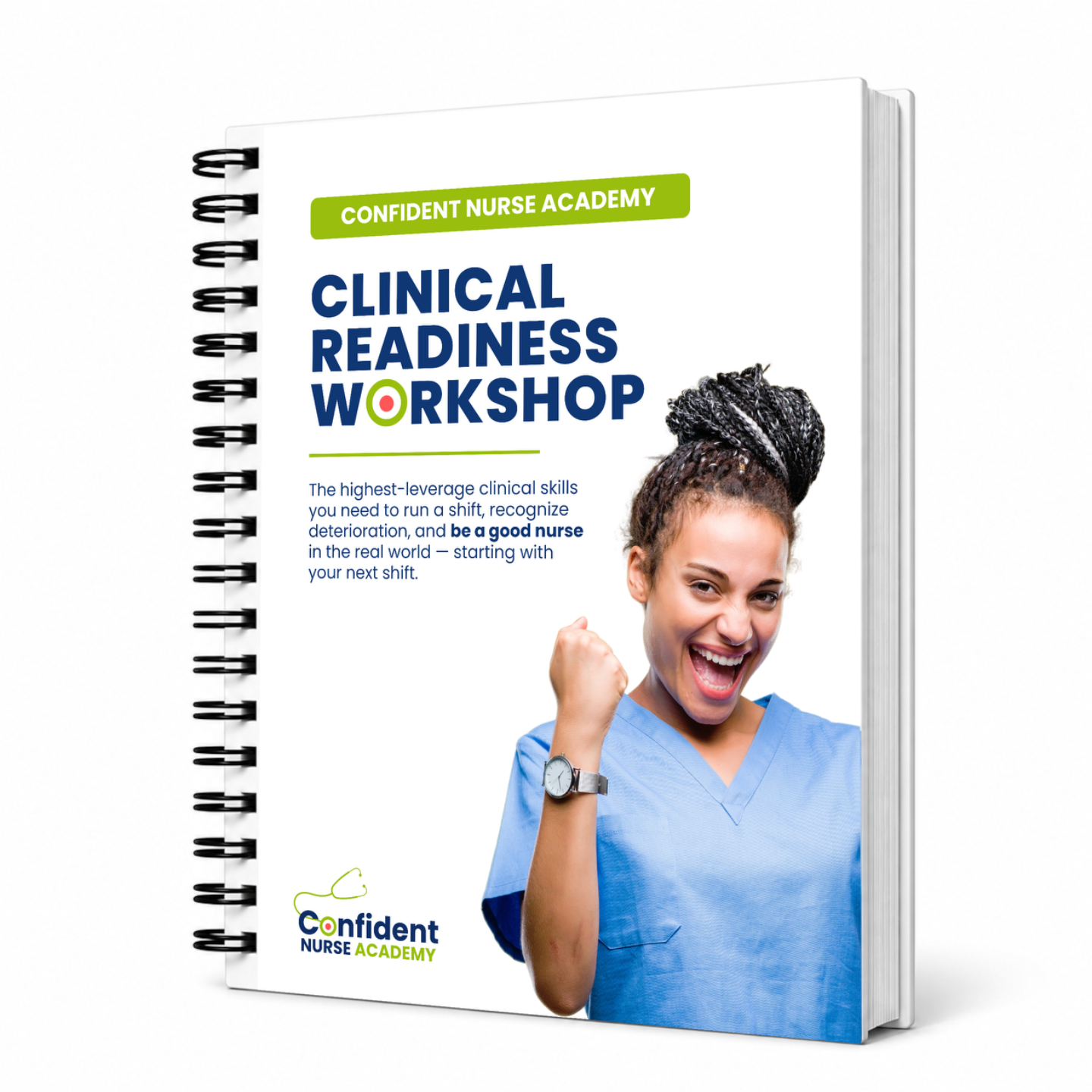
Nurses learn to prioritize the shift, connect the clinical picture, and recognize and respond to deterioration.
Give every nurse the same connected system for bedside thinking and action.
We provide the curriculum and reinforcement—extending the capacity of your educators and preceptors.
Across a decade, researchers examined competency assessments from more than 10,000 new graduate nurses. The findings reveal a persistent gap between recognizing a problem and knowing what to do next.
The 2020 PBDS cohort included 1,222 new graduate nurses educated at 200 nursing schools.
Many struggled to select appropriate interventions, communicate critical information, or explain their clinical reasoning.
del Bueno (2005): Aggregate PBDS data placed approximately 35% of new graduate nurses in the acceptable range.
Kavanagh and Szweda (2017): Among more than 5,000 new graduate nurses from more than 140 nursing programs in 21 states, 23% scored in the acceptable range.
Kavanagh and Sharpnack (2021): In the 2020 cohort of 1,222 graduates from 200 nursing schools, 9% scored in the acceptable range. PBDS was administered after hire and before orientation.
The 2-Day Clinical Readiness Workshop
Confident Nurse Academy applies the principle of triage to education. Instead of trying to teach everything at once, we begin with the clinical judgment skills nurses may need on their very next shift.
Organize the shift and determine what needs attention first.
Gather meaningful findings instead of simply completing tasks.
Connect assessments, vital signs, labs, history, medications, and pathophysiology.
Recognize meaningful patterns, risk, and early signs of deterioration.
Prioritize action, communicate clearly, escalate appropriately, and document the clinical story.
This is not just a list of topics. It is the order nurses use to move from information to action.
The workshop builds the foundation. A full year of Confident Nurse Academy access allows nurses to revisit the lessons as they encounter new patients, new situations, and higher levels of acuity.
Already have a residency program? We strengthen it. Don’t have one? Your nurses still gain a structured clinical-readiness foundation.
The Two-Day Workshop Agenda
Each session builds on the one before it—moving nurses from collecting information to recognizing what it means and acting on what matters.
Select a day to view the full schedule.
Build the assessment and reasoning foundation nurses need to understand what is happening.
View the Full Day One Agenda Hide the Day One AgendaTurn stronger recognition into prioritization, communication, escalation, and action.
View the Full Day Two Agenda Hide the Day Two AgendaNurses leave with connected frameworks they can begin using on their very next shift.
What Nurses Are Saying
“I was able to catch someone before they went into septic shock based on everything you taught me.”— IMCU RN
“My coworker was shocked at how confident and knowledgeable I was during a code. I knew exactly what to do.”— Med-Surg RN
“It was really helpful for me to have the goal of getting assessments, meds, and vitals done by 10. I usually stay 15-30 minutes over. Saturday and Sunday I left on time. These videos have made me feel so much more confident and prepared.”— Med-Surg/Telemetry RN
Individual experiences vary. Confident Nurse Academy provides professional education and does not guarantee a specific clinical, employment, or patient outcome.
The Business Case
Hospitals invest heavily in recruiting, orienting, and supporting every new nurse. When one nurse leaves, the financial and operational cost begins again.
If stronger preparation and support contribute to retaining even one nurse, the avoided turnover cost can exceed the investment in a 25-nurse cohort by $22,665.
Education alone cannot guarantee retention. The $60,090 turnover estimate is from the 2026 NSI National Health Care Retention & RN Staffing Report .
Choose Your Workshop
Give your nurses the same connected clinical-readiness foundation—in person at your hospital or live online this November.
Choose dates and confirm cohort size with us on a planning call.
$1,497 per nurse
Schedule a Planning CallThe same live workshop for $500 less per nurse—available virtually only once in 2026.
$997 per nurse
Save $500 per nurse
Five nurses: $4,985
Frequently Asked Questions
Select a question to view the answer.
No. The Clinical Readiness Workshop complements the education your hospital already provides. It gives nurses a connected framework for organizing the shift, recognizing meaningful change, communicating concern, and responding within their role and hospital policy.
It is designed for new graduate nurses and nurses stepping into higher-acuity care. It is not remedial training. It strengthens the bedside thinking, prioritization, communication, and escalation skills nurses need as they build experience.
Two focused live days give nurses a practical system they can begin applying on their next shift. The goal is not mastery in a weekend. It is clearer priorities, stronger clinical connections, and a more confident approach to recognizing and responding when something changes.
Nurses receive two live workshop days, the Clinical Readiness Workshop workbook, and 12 months of on-demand reinforcement so they can revisit and continue applying what they learned after the live experience ends.
The private in-person workshop is brought to your hospital on dates selected with your team and is $1,497 per nurse. The November 7–8 live virtual workshop delivers the same workshop without the travel for $997 per nurse—a savings of $500 per nurse.
For a private in-person workshop, schedule a planning call so we can discuss your cohort and choose dates. For the November 7–8 live virtual workshop, register your nurses online.
About Confident Nurse Academy
See why we built Confident Nurse Academy and how our experience helps hospitals accelerate clinical readiness.
© 2026 Digital Health Education LLC & Hello Healer®. All rights reserved.
Confident Nurse Academy is an independent educational offering developed collaboratively by Digital Health Education LLC and Hello Healer®. This content is designed solely for the purpose of professional nurse development and continuing education. It is not affiliated with, sponsored by, or endorsed by any hospital, medical device manufacturer, or commercial entity. All materials reflect the independent clinical judgment, research, and educational expertise of the course developers. No commercial support was received for the development of this content.
Research suggests that 54% of new graduate nurses may recognize patient deterioration but remain unable to manage it effectively. And when a patient arrests, readiness cannot wait.
Preview Confident Code Blue Response and see how Confident Nurse Academy helps nurses connect clinical knowledge to clear action when seconds count.

Get started today before this once in a lifetime opportunity expires.